
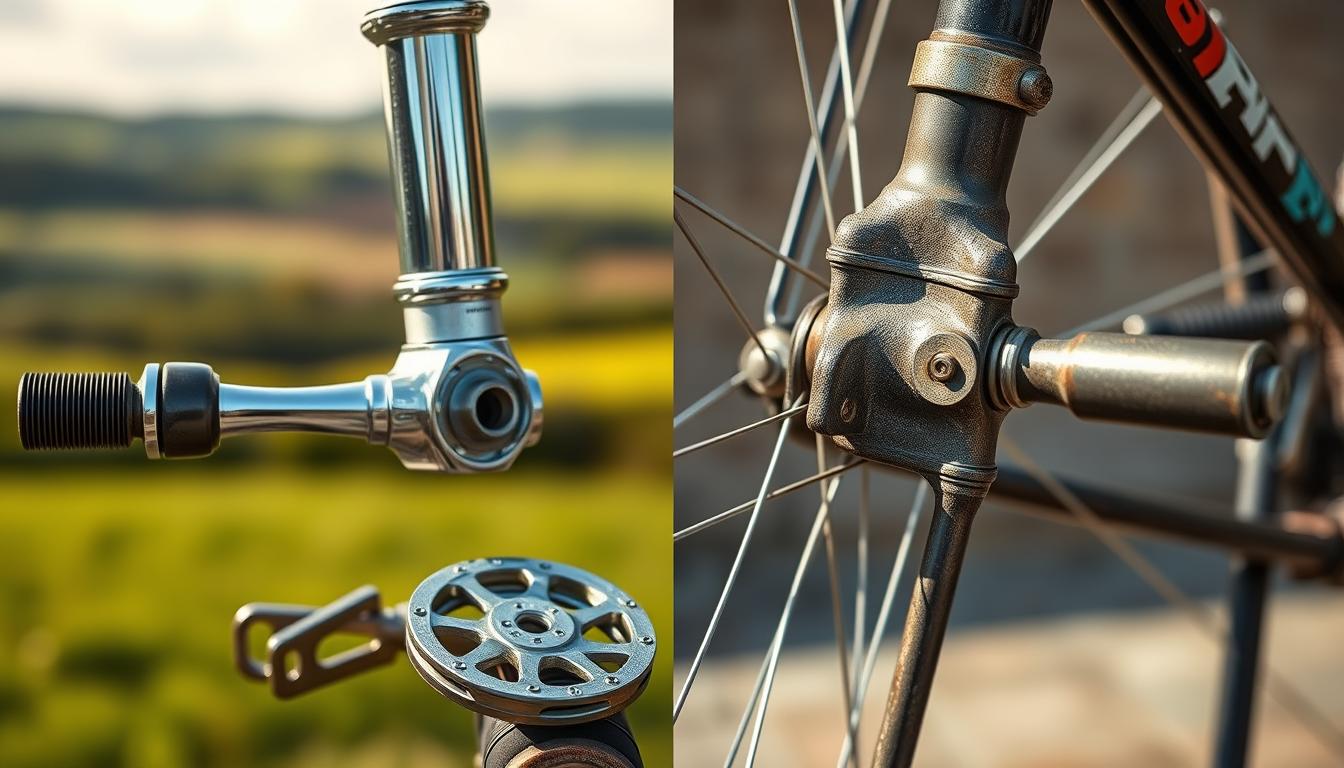
Choosing between alloy and steel is crucial for classic British bike parts. Both materials have shaped bike history. Raleigh and Bianchi used them, each with pros and cons.
This article explores how they affect bike performance. It also talks about choosing the right parts for lasting use and easy care.
The Importance of Choosing the Right Material
Selecting the right material for bike parts is key to high performance and smooth handling. It’s important to know the difference between alloys and steel. This knowledge helps pick materials that fit various biking styles and needs.
Understanding Material Properties
Alloys like aluminum have advantages over steel in terms of density, strength, and flexibility. These features affect bike design in big ways. For bikes that need to be light yet strong, alloys are usually the better choice.
Steel is known for being tough. It brings strength and a bit of weight that’s good for tough rides. This makes it a solid option for certain biking conditions.
How Material Affects Performance
The choice between alloy and steel impacts many aspects of biking. This includes how the bike handles, moves, and feels. Light alloys make bikes more responsive, which is great for racing.
Steel shines in terms of lasting longer, especially on rough paths. Riders have shared stories about using alloy versus steel parts. These stories highlight how the type of material can change what a rider can do.

| Material | Strength | Weight | Vibration Absorption | Durability |
|---|---|---|---|---|
| Alloy (Aluminum) | Moderate | Lightweight | High | Moderate |
| Steel | High | Heavy | Moderate | High |
Classic British Bike Components: Alloy vs. Steel
Every cycling enthusiast should know about alloys and steel. We’re going to look at what makes these materials special for British bikes. You’ll see how they affect a bike’s performance and reliability.
Overview of Alloy Materials
Alloys, especially aluminum ones, have changed the bike world. Companies like Cannondale and Trek use special aluminum to make bikes light yet strong. They carefully engineer these alloys to be tough without being heavy.
Aluminum is great for bikes because it’s strong but not heavy. It doesn’t rust easily, which means it lasts longer. Plus, it’s easy to recycle, making it a choice for green cyclists.

Characteristics of Steel Components
Steel is still key in classic British bikes for good reasons. Choices like high-tensile steel and chromoly add reliability and performance. These types of steel help bikes handle all kinds of paths well.
Steel is very strong, which is great for many bike uses. It can also be fixed up to last many years. This toughness is why many old bikes are still in use and loved today.
| Material | Weight | Tensile Strength | Reliability |
|---|---|---|---|
| Aluminum Alloys | Lightweight | High | Good |
| Steel | Heavier | Very High | Excellent |
Durability and Maintenance Considerations
Knowing about the durability and upkeep of bike parts guides wise choices. Alloy and steel materials offer unique benefits and drawbacks in terms of their lifespan and care. We will look at how long bike parts last, focusing on what each material needs for maintenance.
Longevity of Alloy Components
Alloy parts are light, making bikes easier to handle. This is why many cyclists who seek performance prefer them. Thanks to new improvements in alloy, these parts last longer than before. With regular checks and protective layers, you can greatly increase the longevity of alloy parts and keep your bike running smoothly.
Steel’s Resistance to Wear
Steel is extremely resistant to wear, working well across all types of ground. Its toughness means steel parts can handle a lot of use. But, if not cared for properly, they can rust. To avoid this, use protective sprays and do seasonal checks. This keeps steel components working well for a long time.
Maintenance Requirements for Each Material
Alloy and steel parts need different care methods. Alloy parts should be checked often because they’re prone to impact damage. On the other hand, steel is stronger but needs rust prevention. Knowing these differences and following tips for care will help you keep your bike in top shape.
| Material | Durability | Maintenance Frequency | Common Issues | Preventive Measures |
|---|---|---|---|---|
| Alloy | Improved due to advancements in technology | Frequent check-ups recommended | Impact damage, fatigue | Regular inspections, protective coatings |
| Steel | High wear resistance, long-lasting | Seasonal checks recommended | Rusting, scratches | Protective spray applications, moisture control |
Weight vs. Strength: Making the Right Choice
Choosing parts for classic British bikes involves weight and strength. Riders have various needs depending on how and where they bike. For example, racers often pick light alloy parts to go faster and move easier. But those carrying more gear might prefer steel for its durability and reliability under load.
Alloy frames are great for quick, responsive rides. They’re perfect for racing or climbing steep hills. On the other hand, steel stands up to heavy loads and rough roads better. Experts show us that the best biking material really depends on how you use your bike and what feels right for you.
The best material isn’t the same for everyone. Knowing what you need from your bike will help pick the right parts. Whether speed is your goal or you need something that won’t dent easily, figure out your main biking needs. This will make your cycling experience much better.